Choosing and Managing Life Insurance Beneficiaries
Name the right beneficiaries and update them as life changes to avoid disputes and delays.
Last reviewed and updated July 2026 by Sarah Thompson, CIC.
The beneficiary designation is the most powerful part of a life insurance policy — it overrides even your will. Yet many policyholders name a beneficiary once and never revisit it, leading to payouts that go to the wrong person, to a deceased ex-spouse, or into probate. This guide explains how to choose beneficiaries wisely and keep them current.
What life insurance beneficiaries actually is
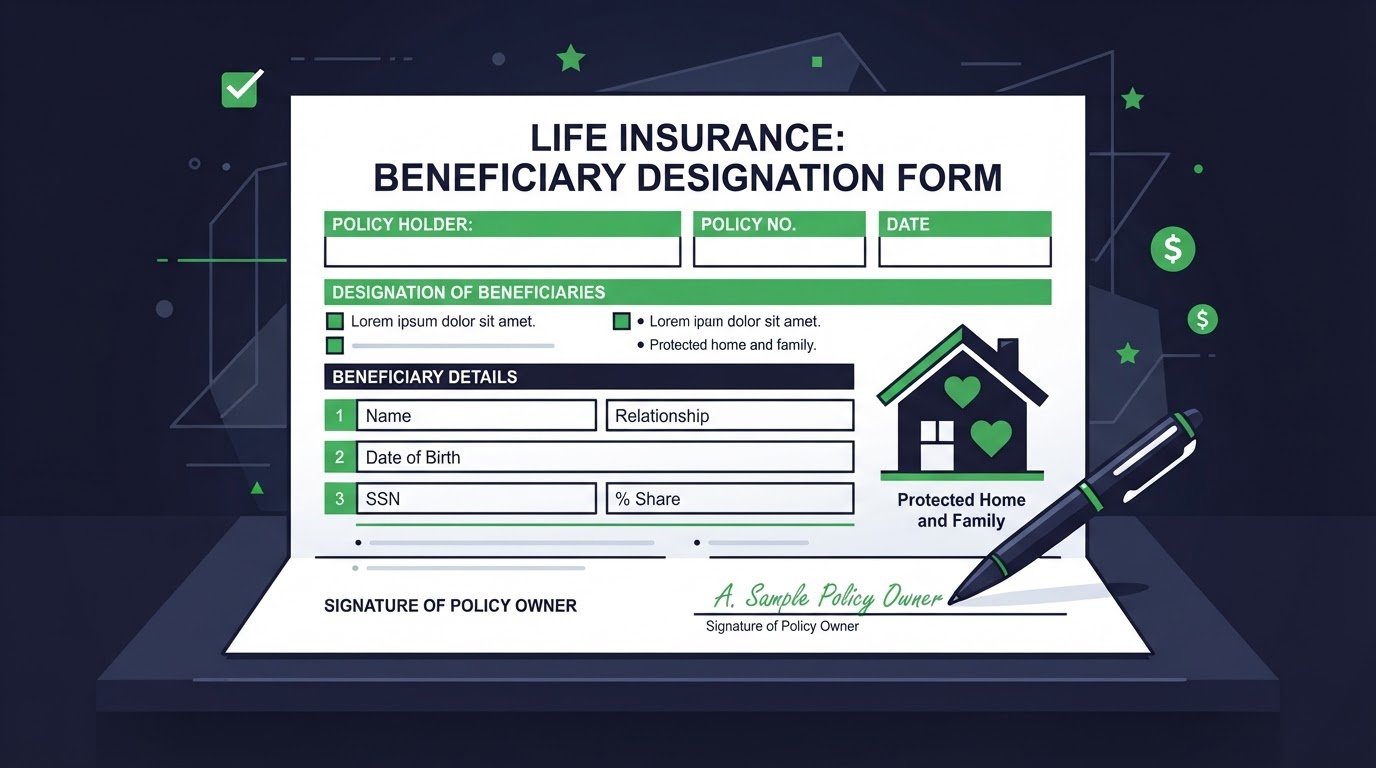
A beneficiary is the person or entity you designate to receive the death benefit. You name primary beneficiaries (first in line) and contingent beneficiaries (who receive the benefit only if no primary survives you). You can name individuals, a trust, a charity, or your estate. Beneficiary designations are controlled by the policy contract and supersede instructions in a will.
Why life insurance beneficiaries matters for US households
Outdated or vague beneficiary designations cause delays, legal disputes, and unintended outcomes. A benefit paid to a minor requires a court-appointed guardian; a benefit paid to your estate goes through probate; a benefit paid to a deceased primary with no contingent may also end up in probate. Thoughtful designations keep the payout fast, private, and aligned with your wishes.
Key takeaway
The right life insurance beneficiaries decision depends on your income, dependents, assets, and risk tolerance — not a one-size-fits-all rule. Use the free calculators on MarklyInsurance to turn these factors into concrete numbers for your situation.
How life insurance beneficiaries works
At its core, life insurance beneficiaries works by trading a predictable, smaller cost — usually a premium — for protection against a larger, less predictable loss. The insurer pools premiums from many policyholders to pay the claims of the few who experience a covered event. That risk-pooling is what makes life insurance beneficiaries affordable for the average US household, and the coverage limits, deductibles, and exclusions in your contract are the levers that set how much of any given loss you absorb yourself.
For life insurance beneficiaries specifically, the details in your contract matter more than the headline numbers. Two policies that look identical can behave very differently when you actually need them, so reading the definitions, conditions, and exclusions — or working with a knowledgeable advisor — is essential before you commit. The terms in the next section explain the language you will encounter.
Who this life insurance guide is for
This guide is written for US individuals and families who are weighing a life insurance beneficiaries decision and want to understand it before they talk to an agent or buy a policy. Whether you are buying coverage for the first time, reviewing what you already have, or comparing options after a life change, the framework below helps you ask the right questions and compare choices on equal terms.
If you already hold a policy, use this guide to check whether your coverage still fits your current situation — income, debts, dependents, and assets all change over time, and a policy that was right five years ago may no longer match your needs.
Key factors to consider
When evaluating life insurance beneficiaries, focus on the factors that most influence both cost and the adequacy of your coverage. These considerations apply to nearly every Life Insurance decision and form the framework we use throughout MarklyInsurance.
- 1. Primary vs contingent: always name contingents so the benefit does not default to your estate if a primary predeceases you.
- 2. Minors: name a trust or guardian for minor children, since insurers cannot pay minors directly.
- 3. Per stirpes vs per capita: per stirpes passes a deceased beneficiary's share to their children; per capita divides among surviving beneficiaries.
- 4. Trusts: an irrevocable trust can manage payouts, protect benefits from creditors, and remove the policy from your taxable estate.
- 5. Tax and benefit implications: naming a special-needs beneficiary directly can disqualify them from government benefits — use a special needs trust.
Common mistakes to avoid
Even informed consumers make avoidable errors with life insurance beneficiaries. Recognizing these pitfalls in advance can save you thousands of dollars and prevent gaps in protection when you can least afford them.
- Leaving a former spouse as beneficiary after divorce.
- Naming a minor without a trust or guardian, forcing a court process.
- Failing to name a contingent beneficiary.
- Assuming your will controls the life insurance payout — it does not.
- Never reviewing designations after marriage, divorce, births, or deaths.
Important terms you should know
Insurance contracts use precise language, and misunderstanding a single term can change the value of your life insurance beneficiaries policy. These definitions clarify the concepts you will encounter when comparing options.
- Primary beneficiary: the person first in line to receive the death benefit.
- Contingent beneficiary: the person who receives the benefit if no primary survives you.
- Per stirpes: a distribution method where a deceased beneficiary's share passes to their descendants.
- Irrevocable beneficiary: a beneficiary you cannot change without their consent.
Choosing the right life insurance beneficiaries
Selecting the right life insurance beneficiaries is a process of matching coverage to your circumstances rather than simply buying the most or the cheapest. Start by quantifying the risk you are protecting against — the financial impact of the event you are insuring — and then determine how much of that risk you can reasonably self-insure through savings. The remainder is what your policy should cover.
Next, compare quotes from several reputable insurers on equal terms: the same coverage limits, deductibles, and riders. A lower premium that comes with thinner coverage is rarely a bargain. Pay attention to each insurer's financial strength ratings from agencies such as AM Best, Moody's, and Standard & Poor's, because a policy is only as good as the company's ability to pay claims.
Finally, revisit your life insurance beneficiaries coverage regularly. Life events — marriage, a new home, a child, a career change, or a significant shift in income — all change the amount and type of coverage you need. An annual review keeps your protection in step with your life.
How to use the calculators with this guide
Every calculator on MarklyInsurance runs entirely in your browser, so the numbers you enter are never sent to a server, stored, or shared. Pair the relevant calculator with this guide to make a confident decision: use the article to understand the factors, and use the calculator to apply them to your own situation. Together they give you a complete picture before you ever speak to an agent or request a quote.
Sources and references
This guide draws on publicly available information from recognized US authorities and industry organizations. We encourage you to consult these primary sources as part of your own research.
- National Association of Insurance Commissioners (NAIC) — Life Insurance
- SEC — Investor.gov: Introduction to Life Insurance
- Federal Trade Commission — Buying Life Insurance
Frequently asked questions
Can I change my beneficiary later?
Yes, unless you named an irrevocable beneficiary. Review and update designations after any major life event.
What happens if I name my estate as beneficiary?
The death benefit goes through probate, which is public, slow, and may expose it to creditors. Naming individuals or a trust avoids this.
Should I use a trust for my beneficiaries?
Trusts add cost but provide control, creditor protection, and estate-tax benefits. They are especially useful for minors, special-needs dependents, or large estates.
The bottom line
life insurance beneficiaries is one of the most important financial decisions a US household can make, and it does not have to be confusing. By understanding how it works, weighing the factors that matter most, avoiding common mistakes, and using the calculators on MarklyInsurance to apply the concepts to your own situation, you can secure the right protection at a fair price. The goal is not to buy the most insurance — it is to buy the right insurance, and to revisit that decision as your life changes.
This guide is educational and does not constitute personalized advice. Your specific circumstances may warrant a conversation with a licensed insurance professional. Use the tools here to arrive at that conversation informed and prepared.
Sarah Thompson
Senior Insurance Analyst & Certified Insurance Counselor (CIC)
Sarah Thompson is a Senior Insurance Analyst and Certified Insurance Counselor with more than 14 years of experience helping US individuals and families make confident insurance decisions. Read more about Sarah Thompson
This article is for educational purposes only and does not constitute insurance, legal, tax, or financial advice. Calculator results are estimates, not quotes. Consult a licensed professional before making coverage decisions. See our Disclaimer.